Journalists are everywhere, whether we notice them or not. They broadcast the news and educate people on what is really happening in the world.
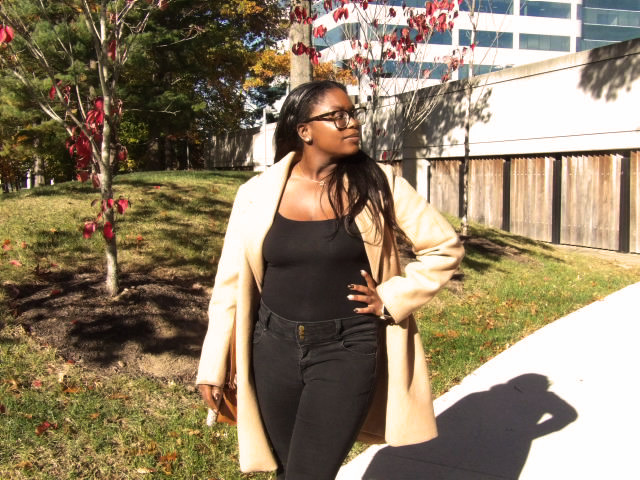
Jasmine Boykin from the BBC News outlet shares her passions as a journalist and tells the truth of her own story.
Boykin’s outlet is international. She works with many stories such as what is happening in Gaza and with the countries that currently watch BBC.
“It’s important to have a holistic understanding of what you’re writing,” Boykin states.
“I feel like that’s a strength as journalists, but it also does give us our limitations to want to push us to think outside the box…you can show that gray area and you should educate your audience,” says Boykin.
Boykin’s first calling within journalism was sports. However, she felt there was much more she could do through her power as a journalist. “I just thought I could give myself a bit more depth in terms of my coverage,” said Boykin,
As a journalist, Boykin concerns herself with being factual and truthful with her readers.
“Grammar, definitely clarity and succinctness [all play an important role in making the news real.]” said Boykin.
Working within the journalism industry can bring along a lot of challenges including diversity and the rise of misinformation.
“As a young black woman, I feel like sometimes journalism is a predominantly white male industry,” Boykin states.
With the current political climate Boykin says that current journalism is being targeted: “I feel that critical analytical skills are currently being under attack,” she said.
However, even if our writing is under attack or being used against others, we must remember that writing is not just a tool to use to bring audiences news, it is to bring voices to the voiceless.
“I think of my writing as my passion,” Boykin states
Every one of us can help each other by spreading awareness of what happens in the world and be unbiased as possible. By researching what news you are reading and spreading it by word of mouth, we can and will be more of a greater community.
“Their opinion’s equally as important, but it’s the inclusion of both or multiple opinions that to me form the truth, because everyone has their own truth at the end of the day,” Boykin concludes.