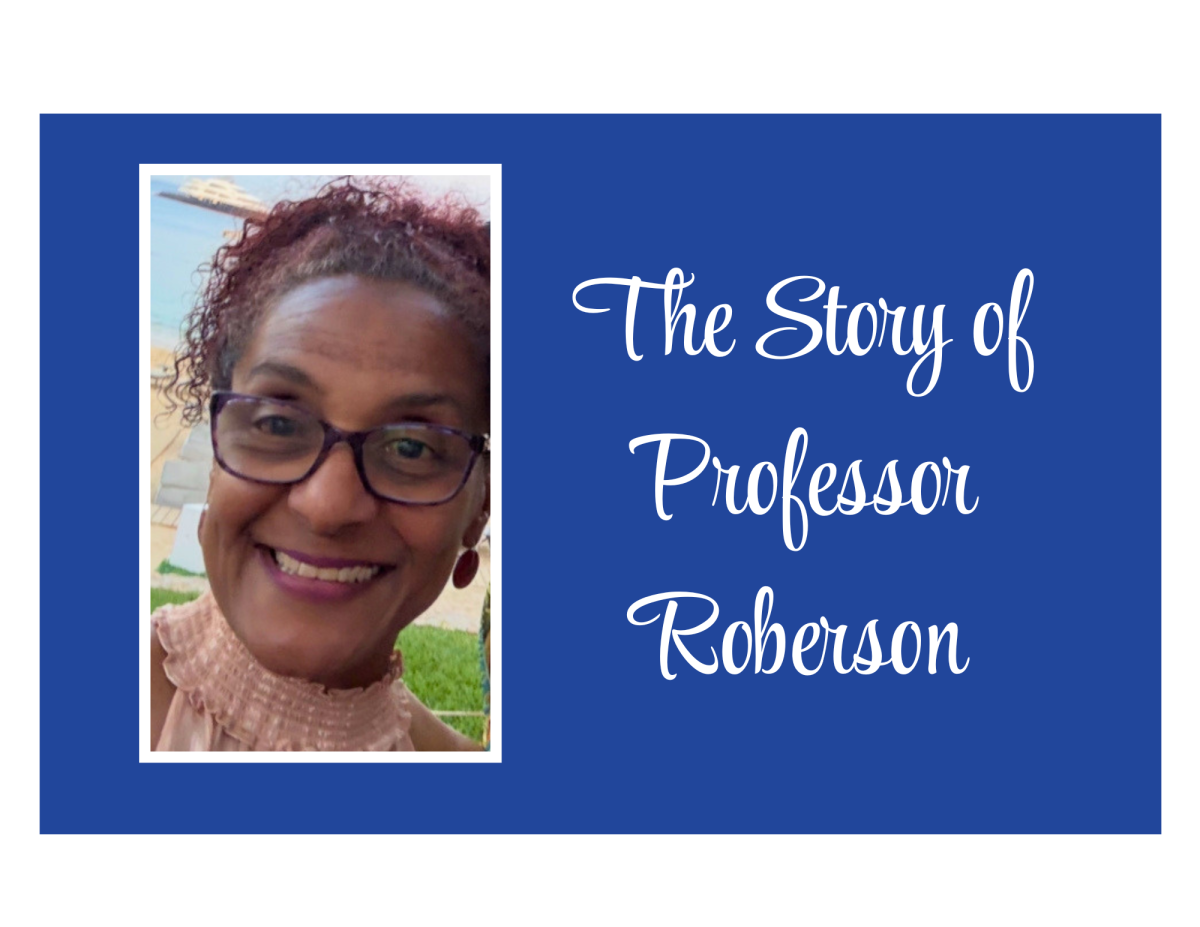
At Howard Community College, education isn’t just about getting a degree, it’s about finding your purpose, being supported by others who are like you, and having a sense of belonging to your community. Professor Elisa Roberson wants to empower students through her work while also creating inclusive environments in which everyone’s voice is heard and respected.
The path to education for Elisa Roberson originated from her family; prior to having children, a decision was made between her husband and herself to be their children’s primary influence, so she left her corporate career and pursued a master’s in education.
“Before we had children, we discussed how vital it would be as parents to be their main source of influence in their lives and therefore left corporate America and earned our master’s in education,” stated Roberson.
This decision opened the door to a long-standing career in education and leadership. She continued through the years teaching a variety of grades before transitioning into higher education and discovering her passion while teaching college students. Through her journey, she also learned how important it was to have diverse leaders with higher education.
“Diversity within higher education is important based on what I have experienced and how I have been mentored; I now feel it is my duty to show other minority individuals they too can be successful with doctorates,” stated Roberson.
At HCC, Roberson has illustrated that her impact goes beyond gaining knowledge of subject matter; she creates an environment in which students are motivated to take responsibility for their learning by owning it. Furthermore, Roberson models a type of leadership that empowers students to be independent and responsible for their academic success.
“I give my students the agency and ownership to be in charge of their own learning,” she stated. “Students are able to set their own goals.”
Roberson’s approach is an example of her commitment to the empowerment of students in order to enable them to succeed. For example, the manner in which she measures student success goes beyond the grades received and places more importance upon the individual growth and maturation that occurs during their experience at college.
“It’s the way that they develop as people… They become critical thinkers and more cognizant of their influence,” she said.
Beyond her teaching, Roberson has also contributed to HCC through programs and initiatives designed to foster inclusion and build dialogue. One such initiative is the “Bridges: Cultivating Conversations and Connecting Communities” program, which was created as a way for faculty and staff to engage in open conversations surrounding diversity and identity.
Outside of the classroom, Roberson has been involved at HCC with various initiatives aimed towards promoting inclusive dialogue and inclusion. One example of her work is the creation of “Bridges: Cultivating Conversations and Connecting Communities,” a program that facilitates open dialogue about identity and diversity between faculty and staff members.
“Bridges was one of the first opportunities we had to intentionally create time to discuss race, ethnicity, and identity between faculty/staff,” Roberson said. “After it ended, I was very motivated to get our faculty/staff talking about these types of issues, so I began this program in order to be able to maintain the conversations we had.”
The HCC community strongly supported this initiative; the program continues to be beneficial to the community itself. According to Roberson, the community received the program well and provided her with a pleasant surprise, stating that despite her initial concerns, there was no opposition to the program.
“There was no pushback that I had expected… it really was very well received.”
Roberson believes that her commitment to creating an inclusive environment also extends to how she views students when they have a negative educational experience due to being unaware of the things available to them in order to help them succeed. She feels that many students who do not feel connected to the campus are not disconnected because of any lack of competencies but because of their lack of knowledge about the resources available to them.
Roberon believes it’s critical for students to create a supportive classroom community and develop advocacy for available campus support resources. This is not just any way for helping students be confident and secure in their future careers but also develop skills when transitioning from HCC.
As a teacher, my goal has always been to assist my students in completing their education and building relationships where they will be able to continue as an effective individual long after leaving us. One of the things that I want for my students once they leave my classroom is that they can take pride and self-worth in themselves and know they have a purpose.
Every day, she supports, develops, empowers, and encourages her students in their leadership classes, as well as many other diverse students, in an equitable or inclusive manner.
The initiative received a lot of support from all around our college and continues to affect our campus community today.
Roberson felt welcomed by the community contrary to her original fear of unacceptability.
As she described, “I thought there would be a negative experience due to my initiative, but the people of this town were incredibly positive.”
Roberson views each student’s level of inclusion, which directly colors her impression of each student’s experience at school. Each student who does not feel included or (successful) as a student has not been given the same access to the resources/tools needed for the student to succeed and to develop their self-esteem.
Roberson has committed herself to making sure her students are aware of what is happening in their classrooms and the effect this has on them regarding their experiences as students. Many of her students do not feel like they belong or are successful as learners because of being unaware of different resources and supports available to them.
“There are a lot of students who don’t feel like they belong and therefore will never think they can ever be successful as learners due to not knowing how to ask for help,” she added.
Roberson attempts to create a community within her classroom by displaying an array of available campus resources to her students. Her goal is for students to gain confidence in their education and know they will continue to receive support throughout their educational experience.
In the end, Roberson hopes each of her students will graduate from HCC not only with an education, but also with a clear direction in career and confidence in themselves when they enter the workforce.
“I hope my students will have a strong sense of direction and really trust that they can learn,” she concluded.
Roberson’s teaching, leading, and commitment to educational equity continually contribute to HCC through the educating of students and engaging and empowering those students who will become productive members of their respective communities.