
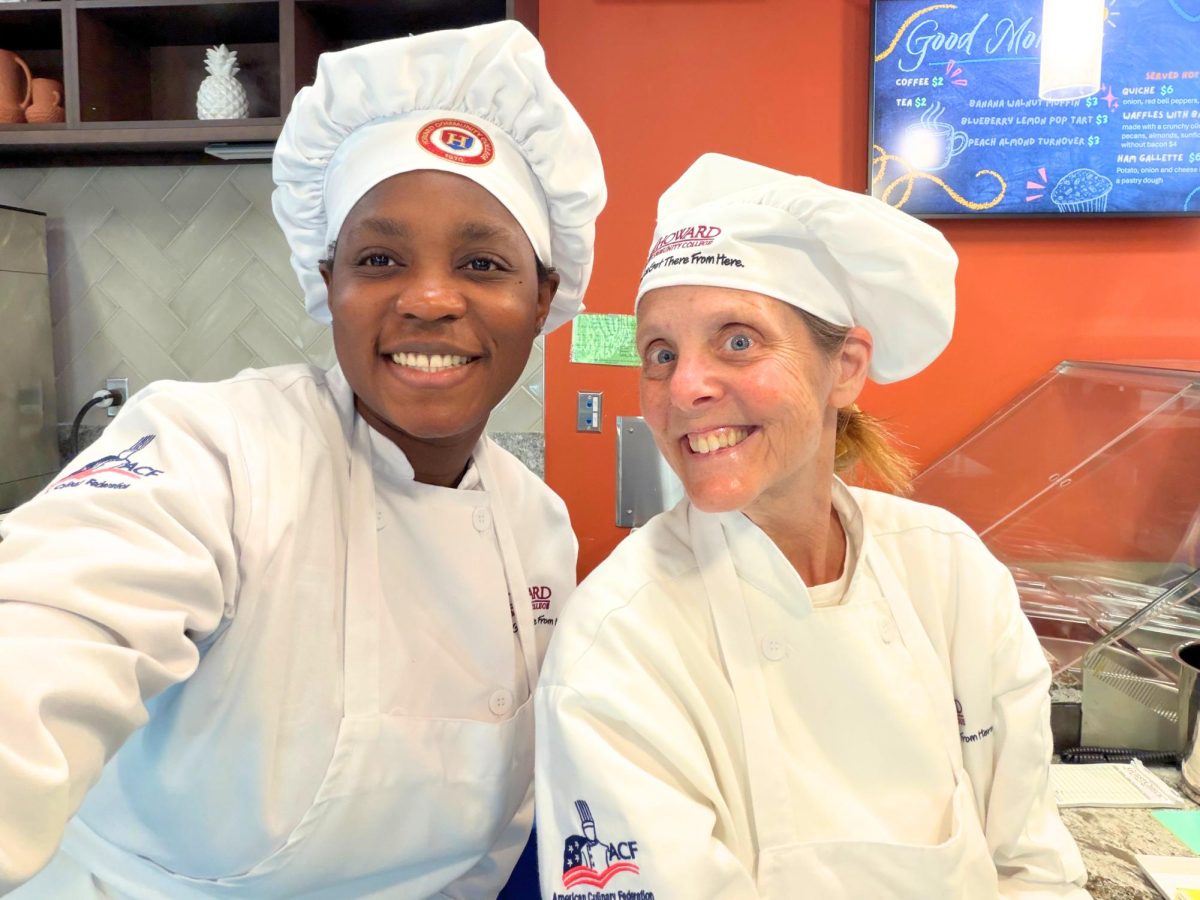
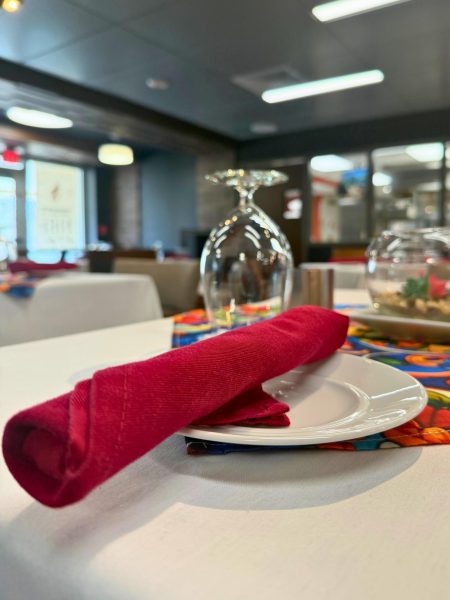
Tucked into the lower level of the Academic Commons, The Dragon’s Fire Restaurant has been serving more than meals this semester. Run entirely by culinary students, the space represents months of student-led menus and fast-paced kitchen work. As the semester comes to a close, the restaurant prepares to pause operations until next term, wrapping up a season of dine-in service and to-go offerings that many students on campus may not have noticed happening just downstairs.
For students passing through the Academic Commons, it’s easy to overlook what’s happening below ground. But inside The Dragon’s Fire Restaurant, culinary students have been rotating through professional kitchen roles, testing career paths, and applying classroom lessons in a live service environment.
The Dragon’s Fire Restaurant Lab operates as a student-run training restaurant open to the community throughout the semester. It offers both dine-in service and to-go options, with a rotating schedule that includes breakfast and pastry service on Mondays and Tuesdays, and lunch and fine dining service on Wednesdays and Thursdays.
This semester’s theme, “Viva México,” inspired menu development as culinary and hospitality students worked together to design, test, and refine dishes across both pastry and savory sections. The process required coordination, timing, and collaboration inside a working restaurant environment.
A Kitchen of Many Paths
Inside the kitchen, students come from a wide range of backgrounds and career goals, even while working in the same space.
For some, the program represents a complete career shift.
Cindy Tilton described returning to school after a long corporate career in communications. She previously worked on subsidiary startup projects across the country before deciding to step away and begin again in a new field.
“I decided to retire a little early and start a new chapter,” Tilton said. “I absolutely adore it in the pastry and certification program.”
Now focused on pastry, she said her motivation is rooted in hands-on creativity. “I’m doing it for the love of utilizing my hands, making something from scratch,” she said.
Evony Atchade shared a similar transition from a different field. She previously studied law before shifting her focus to culinary arts.
“It was time for me to invest in my other passion, which is pastry,” Atchade said. “So that’s why I decided to enroll here too. Let’s start a new life.”
Their experiences reflect a core aspect of the program: students entering culinary training at different stages of life, often bringing prior careers and experiences with them.
Goals, Ambitions, and Second Chances
While some students are rebuilding careers, others are still defining their direction.
Bethany Gassaway said she hopes to work in fine dining after graduation, while also exploring entrepreneurial opportunities tied to her family. “For my own personal job I want to work in fine dining when I graduate,” she said, noting her sister is opening a bistro.
Ever Escobar is interested in hospitality beyond traditional restaurant kitchens. “I’d like to get more into the hotel side of things,” he said, pointing to hotel restaurants and service operations.
Asia Ebron described a more flexible approach, focusing on gaining experience across kitchen roles. She expressed interest in working as an expo, the station responsible for coordinating orders during service. “I want to be expo,” she said.
Across these perspectives, Dragon Fire functions less as a single career pipeline and more as a space where students test interests and refine goals through hands-on experience.
Learning by Doing in the Kitchen
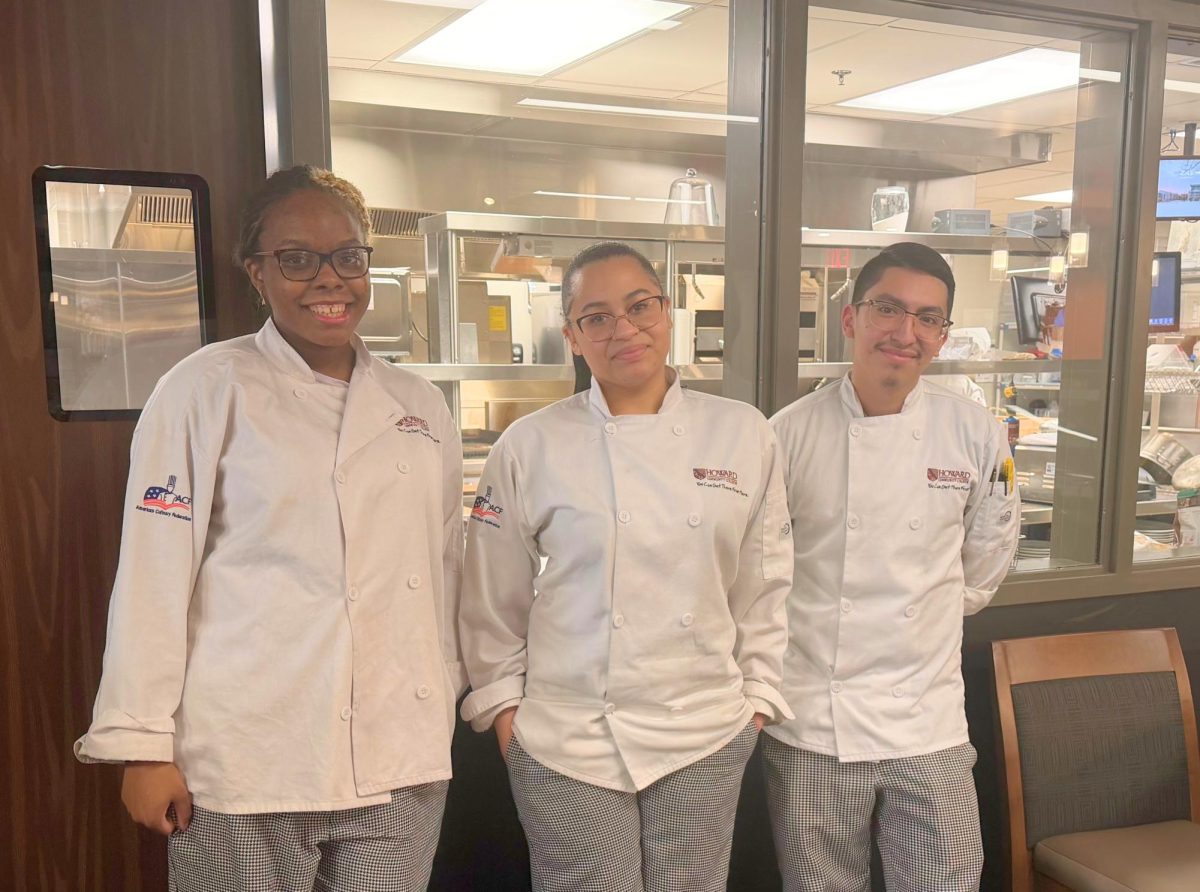
Station rotations for students include sauté, appetizers, oven, pastry, dishwashing, and expo. The structure is designed to expose students to every part of a working kitchen, with responsibilities shifting throughout the semester.
At the start of service, the pace can be overwhelming.
Gassaway described the adjustment to the fast-paced environment, saying, “I was scared this morning doing this… now we know what to do,” reflecting how repetition builds confidence over time.
The rotation system allows students to develop familiarity with each role while understanding how every station contributes to service flow.
Building the Menu Within Limits
Before service begins, students are responsible for developing the menu. The process requires balancing creativity with the operational limits of a training restaurant.
Gassaway said the development process involved extensive testing and revision. “It was weeks long of us just trying to do things,” she said, noting that many early ideas were adjusted before the final menu was selected.
This semester’s “Viva México” theme inspired development across culinary and pastry sections, but not all ideas could move forward.
Instructor Chef McCoy said menu planning is shaped as much by logistics as creativity. “We only serve so many people,” he said. “So I need to be able to reuse certain ingredients over and over again because I’m not a normal restaurant.”
That requirement influences how dishes are structured, with ingredients often used across multiple menu items to reduce waste and maintain efficiency.
Time is also a constraint. “What can we make ahead and hold?” McCoy said. “You can’t just make it all from scratch every week because you only have an hour and a half to get ready.”
Cost factors also affect decisions. Escobar noted that certain ingredients stand out as more expensive. “Probably the most expensive thing on there is what? The fish that we use for the ceviche,” he said.
Together, these limits turn menu development into an exercise in balancing creativity with real-world kitchen constraints.
The Dining Experience
Although it functions as a training environment, Dragon Fire operates as a structured dining experience during the semester.
The restaurant offers plated meals and to-go options, giving guests access to student-run restaurant service on campus. The experience is designed to mirror professional dining rather than cafeteria-style service.
Ebron described the format as a full-course experience, noting it includes “a three course” meal structure. The menu also includes options for a range of dietary needs. “We have gluten-free, vegan, vegetarian, all that jazz,” said Asia Ebron, noting that dishes can be adjusted when possible to accommodate allergies.
Despite this, students said many people on campus are unaware the restaurant exists. Reservations are required for dine-in service and tend to fill quickly during operating weeks, according to Gassaway.
The to-go option provides additional access during operating hours while working within the limits of a training schedule.
Closing Out the Semester
As the semester ends, The Dragon’s Fire Restaurant prepares to close until the next academic term. The pause marks the end of a cycle of training, service, and menu development.
Throughout the semester, students rotated through kitchen stations, contributed to menu design, and worked in a live service environment with real guests.
While the restaurant will temporarily close, students leave with experience in timing, coordination, communication, and kitchen operations under pressure.
From students transitioning from long careers to those just beginning culinary training, the program reflects a wide range of ambitions shaped through practice.
When Dragon Fire reopens next semester, a new group of students will step into the same stations, continuing the cycle of learning, training, and transformation.