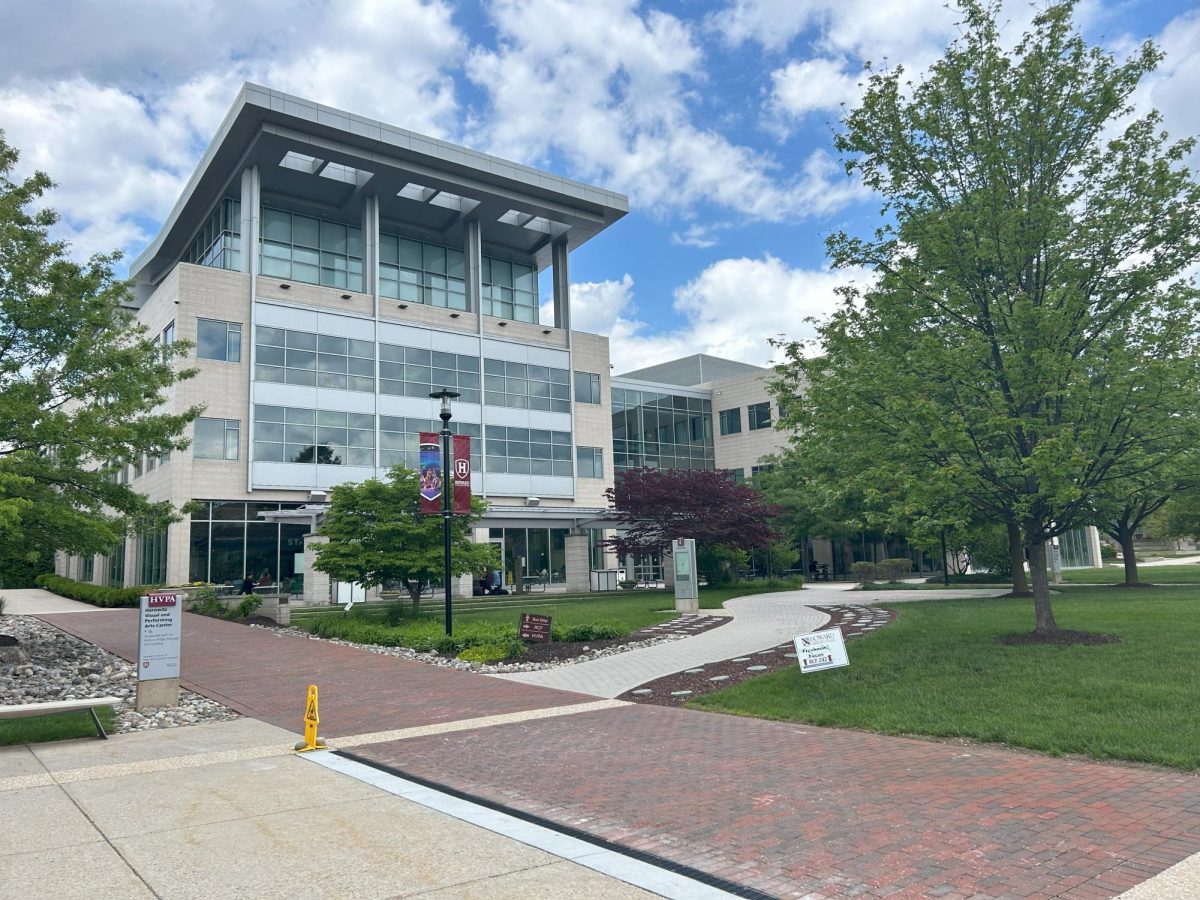
Backpacks slung over their shoulders with laminated “Leadership in the Battlefield” bus tickets in hand, students gathered in Lot A at Howard Community College early Friday morning, shivering in the crisp air beside a humming charter bus.
Clanking shoes and light chatter filled the morning stillness as students climbed aboard and settled into window seats just after a cloudy sunrise. Many expected the 90-minute ride across the bay to be quiet, a chance to wake up before arriving on Maryland’s Eastern Shore.
Instead, the journey itself became part of the lesson.
Shortly after departure, tour guide Rod Bourn began sharing stories about Harriet Tubman’s life and the Underground Railroad. Folders highlighting historical facts moved down the aisle while a PBS documentary about abolitionist William Still played on the small screens above the seats.
“I honestly thought we were just going to get on the bus and travel there,” student Kelsey Dillon said, surprised when the learning started almost immediately.
As the bus climbed onto the Chesapeake Bay Bridge, fog blanketed the water on one side while the other reflected the bridge across the deep blue bay, a quiet moment marking the start of a day tracing the Underground Railroad and Tubman’s history in Maryland.
After crossing the Bay Bridge, the bus rolled past farms and open land before arriving in Cambridge, Maryland, where the group stepped out under clearing skies at the Sailwinds Visitor Center along the waterfront. Waiting inside was a second guide, Ken Johnston, who spent years retracing the routes once traveled by Harriet Tubman and other freedom seekers.
Standing in a loose circle, Bourn introduced Johnston, who explained the history of the region and the journey they were about to follow.
“What Harriet did in three weeks took me five years,” Johnston said, describing his effort to retrace Tubman’s steps from Maryland to Pennsylvania.
Students introduced themselves, sharing their names, majors, and what inspired them to join the trip. For many, it was their first time visiting Cambridge and Maryland’s Eastern Shore.
The introductions quickly turned strangers into conversation partners as Bourn divided the group into small discussions about leadership and personal interests.
“It was great to see students stepping out of their comfort zones, speaking to people they didn’t know and expanding their perspectives,” said Thelma Bush, assistant director of Student Life at Howard Community College.
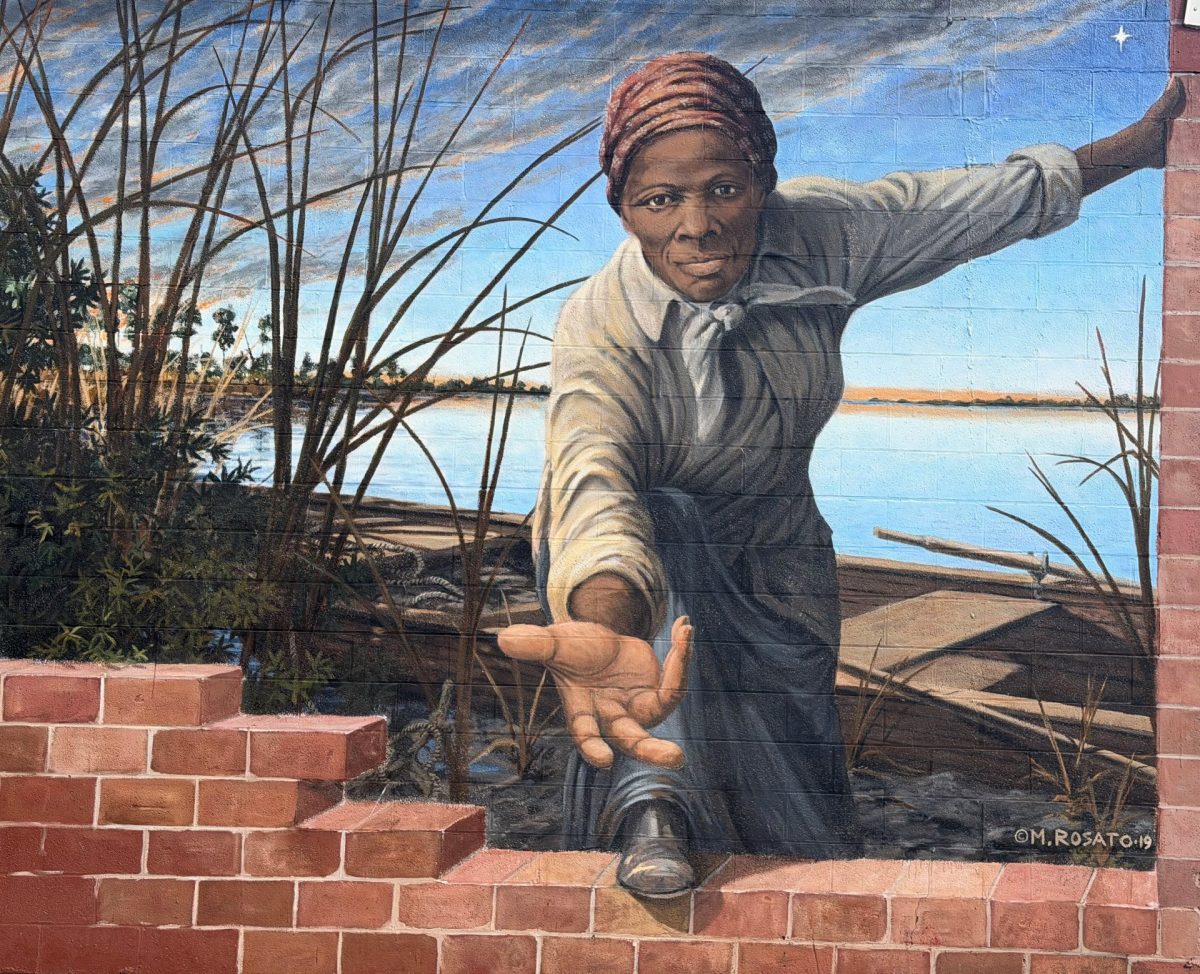
A short distance away, the bus stopped near the Harriet Tubman Museum and Educational Center, where a large mural titled Take My Hand stretched across the side of the building. The vibrant artwork depicted Tubman reaching forward, her outstretched hand symbolizing guidance, courage, and the journeys she led along the Underground Railroad.
Standing in front of the mural, Bourn gathered the students and led a discussion about leadership, and the choices people make throughout their lives. Students were divided into small groups to reflect on leadership, community service, and moments when people must “pivot,” a theme Bourn connected to Tubman’s own choices.
“Pivoting doesn’t always mean a big decision; sometimes it’s a small choice about who you are and who you want to be, but it can have a big impact,” Bush said.
From there, the group boarded the bus again and traveled into downtown Cambridge to another historic landmark tied directly to the realities enslaved people once faced.
Just outside the Dorchester County Circuit Courthouse stood the Beacon of Hope statue, a bronze monument honoring Tubman’s courage and the lives she helped lead to freedom. Johnston explained that enslaved people were once brought to the courthouse to be auctioned and sold. He also shared the story of how Tubman later orchestrated a rescue mission for her niece at an auction in front of that very courthouse, defying the system that once oppressed her.
“Although Harriet was illiterate, she was highly intelligent and had her ear to the ground,” Johnston said.
From the courthouse steps, the group walked toward the nearby waterfront, passing homes dating back to the early 1700s and tracing the same streets enslaved people once walked through town with no shoes on their feet.

From the courthouse steps, the group walked past homes as old as the 1700s, tracing the streets enslaved people once walked before ending at Long Wharf Park along the Choptank River. Once a shipping point where enslaved people arrived in Dorchester County before being auctioned and sold at the courthouse.
“I couldn’t believe we were walking the same streets that once held so much pain,” Dillon said.
Here, the group paused for lunch along the waterfront. Students ate boxed lunches provided by HCC, and some walked along the pier to view the replica of the Choptank River Lighthouse.
Bush said one of the goals of the trip was to help students connect with local history that often goes unnoticed. Keeping the experience within Maryland, she said, allowed students to see how much history exists within their own state.
After leaving Cambridge and the waterfront, the bus moved deeper into rural Dorchester County. The roads narrowed, fields stretching wide on either side as the group approached one of the most significant places in Tubman’s life.
The bus rolled onto Brodess Farm, the plantation where Harriet Tubman was born and raised. When students stepped off, the landscape was quiet. Open fields stretched beneath a wide sky. The original buildings no longer stood, but the land remained where Tubman spent her early years before escaping slavery and later returning to guide others to freedom.
Johnston encouraged the group to pause.
“Take it in,” he said. “Feel it in the wind.”
Students walked slowly across the open space, some staring out across the fields while others stood quietly reflecting on the history tied to the land.
“It was bittersweet,” Dillon said. “Like, wow, I get to be here but also thinking about the history of this land.”
Stevenson described the moment as heavy.
“Knowing she walked those same grounds, it felt like we were walking in her footsteps.”
The bus traveled a short distance to the small community of Bucktown, its rural roads flanked by woods and open pastures as students silently stared out into the trees while guides encouraged them to imagine enslaved people searching for freedom under the cover of night.
At the Bucktown General Store, students learned that as a child, Tubman was struck in the head with a heavy weight by an overseer while running errands. An injury that caused lifelong health issues, including seizures.
Inside, co-owner Susan Meredith shared stories about Tubman’s childhood and the building’s history. She spoke energetically about Tubman checking muskrat traps as a child and about the hardships she endured growing up enslaved.
Meredith passed around several historical artifacts for students to examine, offering a tangible connection to the lives of enslaved people in the region. Before leaving, she encouraged students to reflect on Tubman’s leadership.
“Be positive,” Meredith told the group. “Be a leader.”
The visit also came with an unexpected moment. After parking beside the store, the bus sank into the muddy ground.
“It was kind of symbolic,” Stevenson said with a light smile. “We got stuck a little, just like Harriet and so many others faced obstacles. But we kept moving forward.”
The group’s final stop was the Harriet Tubman Underground Railroad State Park Visitor Center in Blackwater National Wildlife Refuge. Students explored exhibits, artifacts, and films detailing Tubman’s work guiding freedom seekers north and her later life advocating for equality in Auburn, New York.
On the ride back to campus, the sun dipped low over the Chesapeake Bay as the bus crossed the bridge again, the water glowing beneath the fading light.
After a day spent walking through the landscapes tied to Tubman’s life, Bush said the experience allowed students to see history in a different way. Visiting the sites helped connect lessons of leadership, courage, and resilience to the places where Tubman’s story unfolded.